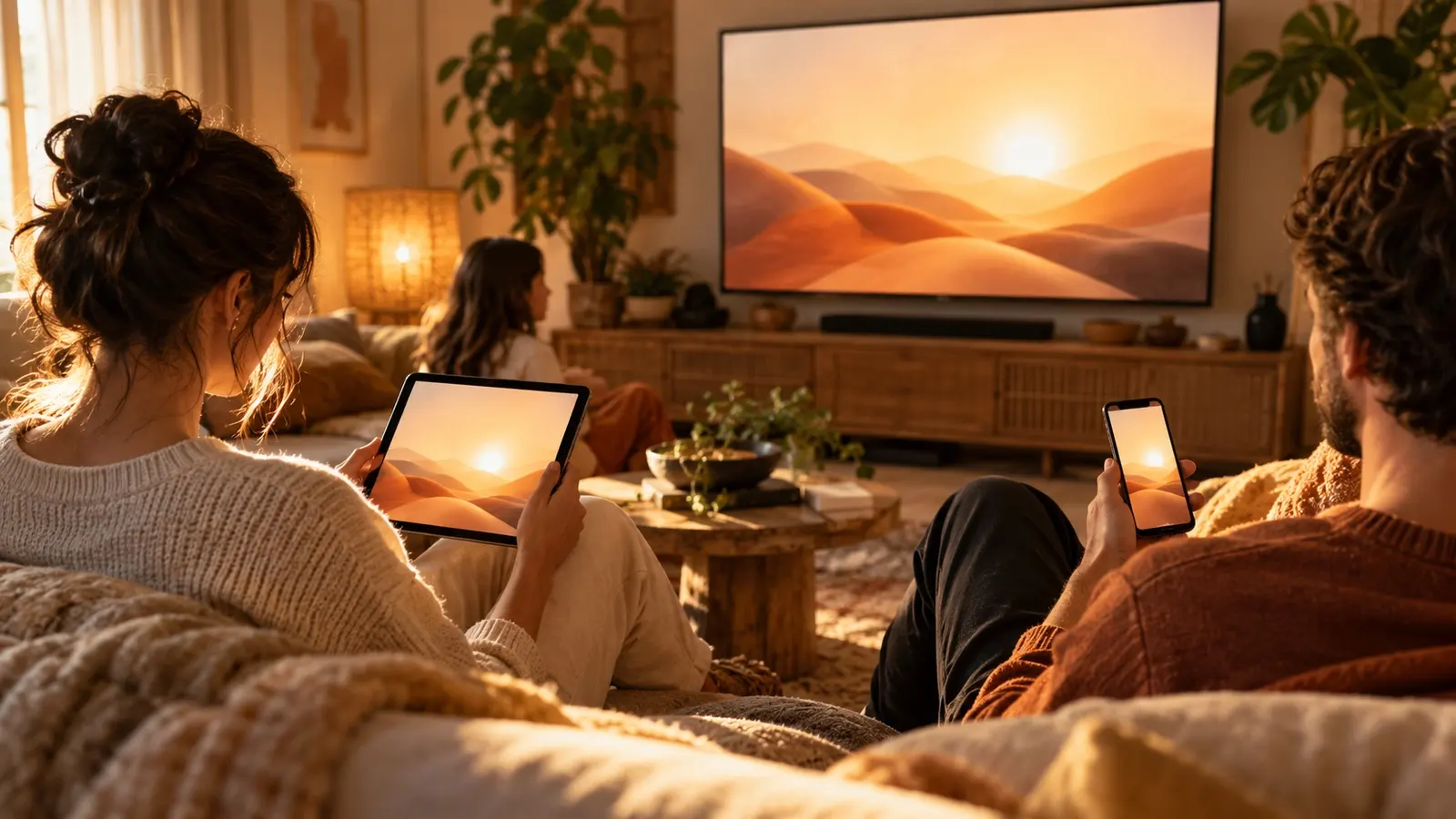
- YouTube's 2026 AI content tools enable brands to create and optimize video campaigns across mobile, desktop, and connected TV without manual production overhead.
- Creator partnerships on YouTube now integrate directly into brand campaigns, expanding reach beyond owned channels and leveraging creator-audience trust.
- Direct TV buying through YouTube allows advertisers to place campaigns on television screens alongside YouTube content, unifying video ad spend across linear and digital.
- AI-driven optimization automatically adjusts creative, targeting, and bidding across screens in real time, reducing manual campaign management and improving ROAS.
- Multi-screen reach on YouTube increases brand impression volume and frequency while maintaining cost efficiency through platform-native attribution.
- YouTube Brandcast 2026 announcements signal YouTube's shift toward end-to-end campaign automation, positioning the platform as a unified video ad buyer for TV, mobile, and desktop.
- Brands using YouTube's creator partnership tools see faster campaign launches and higher engagement rates compared to static, brand-only content strategies.
What YouTube's 2026 AI Tools Do for Multi-Screen Campaigns
YouTube's latest AI-driven content tools are designed to solve a core pain point for modern advertisers: creating, testing, and scaling video ads across mobile, desktop, and connected TV from a single platform. Rather than producing separate creatives for each screen size or device type, brands can now input core messaging and assets, and YouTube's AI generates optimized variations automatically. This reduces production time from weeks to days and lowers the barrier to entry for mid-market brands that lack in-house video production teams.
The tools integrate directly into Google's advertising ecosystem, pulling performance signals from YouTube, Google Search, and Display Network to inform creative decisions. Brands upload headline copy, product images, or existing video clips, and the AI engine compounds these into full-length ads tailored to each screen's optimal format, aspect ratio, and viewing context. This capability directly addresses YouTube's position as the second-largest search engine and third-largest digital ad platform globally.
- Automated creative generation reduces production cycles and allows A/B testing at scale without hiring additional video editors or agencies.
- Cross-device optimization ensures ads display correctly and performantly on YouTube mobile (58% of YouTube watch time), YouTube desktop, and connected TV (Smart TVs, Roku, Apple TV).
- Real-time asset adjustment means YouTube's algorithm swaps creative elements based on performance signals, viewer engagement, and device context within the same campaign.
- Native integration with Google Ads allows teams to manage budgets, bids, and targeting alongside existing search and display campaigns in one dashboard.
How YouTube Creator Partnerships Expand Brand Reach
YouTube Brandcast 2026 emphasizes creator partnerships as a core strategy for brands seeking authentic reach beyond paid placements. Rather than relying solely on brand-owned channels, YouTube's partnership tools connect advertisers directly with creators whose audiences align with target demographics. These partnerships are managed through YouTube's platform, removing friction in creator-brand negotiation and ensuring compliance with platform policies and disclosure requirements.
When a brand activates creator partnerships on YouTube, the creator produces content featuring the brand's product or message, and YouTube's algorithm promotes that content across both the creator's channel and YouTube's broader recommendation feed. This dual amplification—organic reach via creator fans plus algorithmic push via YouTube—generates significantly higher impression volume and engagement than either channel alone. Brands benefit from creator authenticity (which drives higher trust and conversion rates) while creators gain direct revenue and access to performance metrics.
- Creator selection automation uses YouTube's first-party data to match brands with creators whose audience demographics, engagement rates, and content style align with campaign goals.
- Revenue sharing and transparency are built into YouTube's creator partnership contracts, reducing payment disputes and enabling long-term creator relationships at scale.
- Content integration tools allow brands to brief creators on messaging but preserve creative control, resulting in more authentic content that performs better against platform algorithms.
- Performance attribution tracks conversions, clicks, and brand lift directly from creator partnership content, proving ROI to finance teams and enabling budget reallocation toward top-performing creators.
Direct TV Buying via YouTube: Integration and Execution
One of the most significant announcements from YouTube Brandcast 2026 is direct TV buying—the ability to purchase connected TV and linear television inventory through YouTube's interface. Historically, TV buying required separate workflows, different agencies, and separate budgets. YouTube now unifies this by allowing advertisers to treat YouTube's connected TV placements and traditional broadcast TV slots as inventory they can purchase directly, allocating budget across both media types from a single Google Ads campaign.
This approach appeals to large advertisers running brand awareness campaigns who want to reach TV audiences but lack dedicated TV media buyers or agencies. By consolidating YouTube video ads, connected TV (YouTube on Smart TVs), and new direct broadcast TV options into one platform, brands can allocate budgets dynamically based on real-time performance. An ad underperforming on YouTube mobile might be shifted to TV during prime time hours, or vice versa—all without breaking the campaign or fragmenting reporting.
- Unified inventory marketplace includes YouTube video, YouTube on Smart TVs, and direct TV broadcast slots accessible from Google Ads, eliminating the need for separate TV media buying platforms.
- Dynamic budget allocation allows campaigns to shift spend toward the highest-performing screens and dayparts automatically, improving overall ROAS without manual intervention.
- TV-grade reporting and attribution integrates YouTube's conversion tracking with TV impression data, providing marketers with end-to-end customer journey visibility from TV exposure to online conversion.
- Frequency management across screens ensures a single user isn't overexposed to the same ad on YouTube mobile and then again on TV, reducing wasted impressions and improving brand recall without ad fatigue.
AI Optimization Across Screens and Real-Time Performance
Beyond creative generation and creator matching, YouTube's 2026 AI tools continuously optimize campaign performance across all screens in real time. Machine learning models monitor thousands of performance signals—CTR, view-through rate, engagement, conversion events, time-of-day patterns, and device type—and automatically adjust bids, targeting, and creative rotation to maximize the KPI the advertiser has selected (e.g., CPL, ROAS, or brand lift).
This real-time optimization is particularly valuable for campaigns spanning multiple screens because user behavior, conversion probability, and cost-per-action vary dramatically by device. A user on mobile may respond better to skippable in-stream ads and vertical video, while the same user on TV may need a full 15-second spot to process a brand message. YouTube's AI learns these patterns and adjusts the campaign's creative, bidding, and targeting to match the optimal strategy for each screen context, without requiring a marketer to manually segment and manage separate campaigns.
- Automated bid optimization adjusts CPM and CPC bids per screen type, geography, and audience segment based on real-time conversion probability, lowering cost-per-action across the portfolio.
- Creative rotation logic prioritizes the highest-performing ad variants by screen type and daypart, ensuring that mobile users see the mobile-optimized creative and TV viewers see the full-length spot.
- Audience refinement uses first-party conversion data and YouTube's behavioral targeting to continuously narrow the audience toward users most likely to convert, reducing wasted impressions.
- Incrementality testing embedded in campaigns measures the true incremental impact of ads (not just correlation), helping finance and executive teams understand the genuine business lift YouTube campaigns deliver.
Expected ROI and Implementation for Marketing Teams
Brands adopting YouTube's 2026 AI tools and multi-screen strategy should expect measurable improvements in two key areas: campaign efficiency and reach expansion. On efficiency, automation reduces manual labor (creative production, A/B testing setup, bid adjustments) by 40–60%, meaning marketing teams can scale campaign volume without proportional headcount increases. On reach, multi-screen presence (YouTube + TV) increases brand impression frequency and reach velocity, typically lifting top-of-funnel metrics like brand awareness and consideration by 15–25% compared to YouTube-only campaigns.
Implementation begins with auditing current YouTube campaigns and identifying which have high impression volume and conversion velocity. These are candidates for AI optimization upgrades. Next, teams should evaluate creator partnership opportunities—particularly for brands in lifestyle, consumer packaged goods, and direct-to-consumer verticals where creator authenticity drives purchasing. Finally, brands should pilot direct TV buying with 10–20% of annual video budget to test multi-screen attribution and incremental lift before scaling.
- Campaign setup time drops from 2–3 weeks (manual production + testing) to 3–5 days with AI tools, enabling faster time-to-scale for seasonal and product launch campaigns.
- Cost-per-acquisition (CPA) improvements of 10–20% are typical when AI optimization is enabled, due to improved targeting and creative matching across screens.
- Team resource reallocation frees junior marketers from bid management and basic creative tasks, allowing focus on strategy, audience insights, and conversion optimization.
- Cross-screen attribution accuracy improves significantly when using YouTube's unified reporting, reducing reliance on third-party attribution platforms and increasing confidence in budget allocation decisions.
Want these results in your account?
Book a free 30-minute audit — we'll apply these tactics to your Google Ads, Meta Ads, or full funnel.