
Google Ads for Roofing Companies: Pay for Signed Jobs, Not Cheap Leads
Repair calls are cheap to get. Full roof replacements pay the bills. We build and manage roofing Google Ads around booked revenue — so your budget goes to the jobs that actually grow the business.
In short: ConvertLab360 manages Google Ads, Local Services Ads and Meta Ads for roofing contractors in the United States. Instead of optimizing for cost per lead, we separate repair, replacement and storm campaigns, send signed-job data from your CRM back into Google Ads, and judge every campaign by revenue per ad dollar. It starts with a free Roofing PPC Profit Audit.
Last updated · ConvertLab360 team
Repair vs. Replacement: Why the Cheapest Roofing Lead Can Cost You the Most
Google Ads optimizes toward whatever you tell it is a conversion. If every form and call counts the same, the algorithm learns to find more of the easiest leads to get — usually small repairs.

Cost per lead
Repair leads look cheaper…
Revenue per $1 of ad spend
…but replacement returns about 6× more.
Illustrative example from the table below, not results from a specific company.
| Metric (one month) | Roof replacement | Roof repair |
|---|---|---|
| Leads | 12 | 40 |
| Cost per lead (CPL) | $200 | $80 |
| Ad spend | $2,400 | $3,200 |
| Jobs closed | 4 | 12 |
| Average job value | $12,000 | $900 |
| Revenue | $48,000 | $10,800 |
| Ad cost per closed job | $600 | $267 |
| Revenue per $1 of ad spend | $20.00 | $3.38 |
Judged by cost per lead, the repair campaign looks 2.5× better. Judged by revenue, the replacement campaign returns roughly six times more per ad dollar. An account optimized for CPL alone will quietly shift budget toward repairs — the opposite of what most roofing owners want.
The fix is not "more leads". It is telling Google Ads which leads became inspections, estimates and signed contracts, and what each was worth — then bidding on that. Gross margin, crew capacity and seasonality still matter, so we look at those too.
Why Roofing Google Ads Stop Paying Off
Most roofing accounts we look at have leads coming in. The problem is what happens between the click and the signed contract.
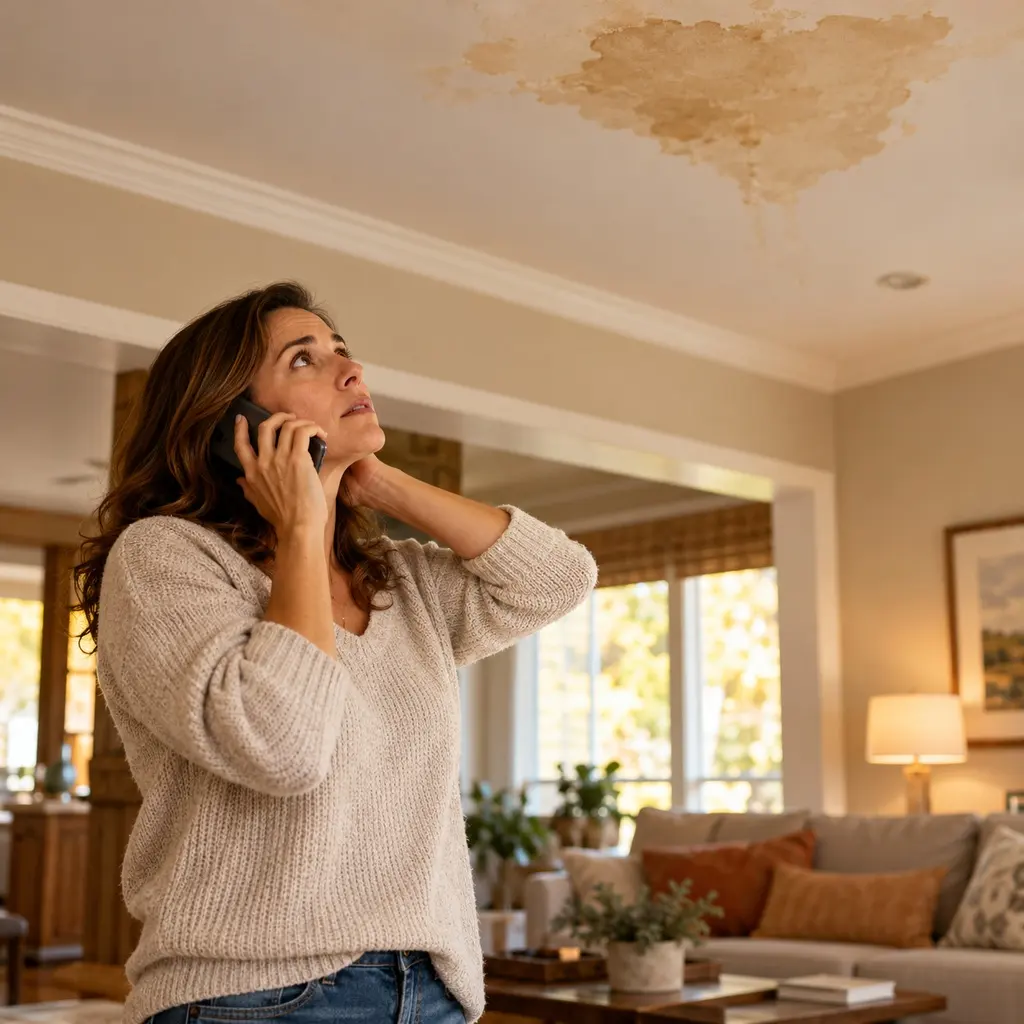
Bidding on Form Fills, Not Jobs
When every call and form counts as one conversion, Smart Bidding can't tell a $900 leak repair from a $12,000 re-roof. It chases volume, not value.
Repair, Replacement and Storm in One Campaign
"Roof leak repair", "roof replacement cost" and "hail damage roof insurance claim" are different buyers. One campaign with one budget lets the cheapest intent win.
Calls Never Connected to Closed Jobs
Without call tracking and a link to your CRM, you can't see which keyword produced the inspection that turned into a signed contract.
LSA Working, Search Inconsistent
Local Services Ads bring steady calls while Search swings month to month. Run without coordination, the two compete for the same homeowner instead of covering more ground.
Leads Outside the Crew's Radius
Loose location settings show ads to people in towns your crews won't drive to. Every one of those clicks is spend on a job you were never going to take.
Missed Calls and Slow Follow-Up
A homeowner with a leak calls the next roofer on the list. If calls go unanswered after hours, the ads are generating jobs for someone else.
How We Run Google Ads for Roofing Contractors
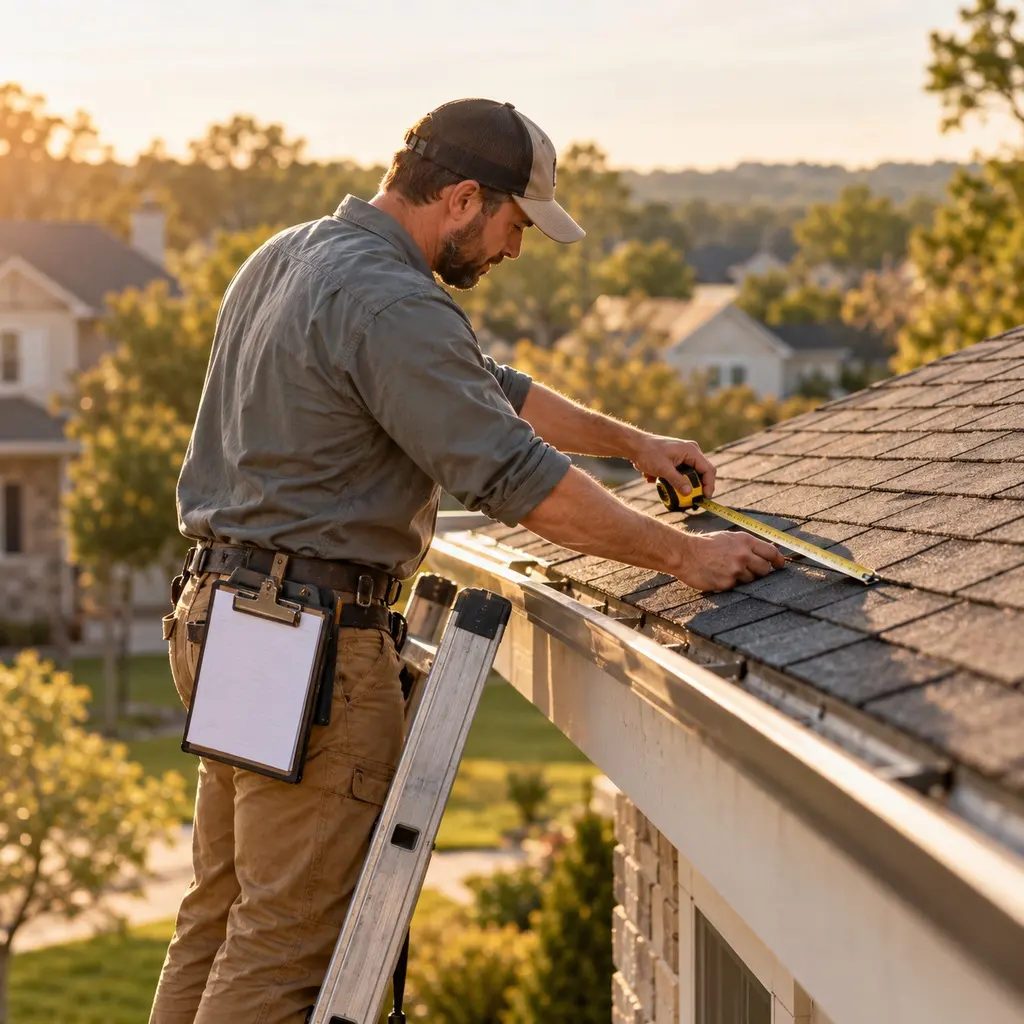
Five steps, in this order. Tracking comes before scaling — you can't optimize toward jobs you can't see.
- 01Profit audit
- 02Tracking to the signed job
- 03Split by job type
- 04Pages and lead handling
- 05Value-based bidding
-
Profit Audit
We review your Google Ads account, LSA, website and tracking, and compare the last 60–90 days of leads by job type against what actually closed.
-
Tracking to the Signed Job
GA4, Google Tag Manager and call tracking, plus offline conversion import: inspections, estimates and signed contracts go back into Google Ads with their real value.
-
Campaigns Split by Job Type
Separate campaigns and budgets for replacement, repair and storm or insurance work, with service-area targeting matched to where your crews actually go.
-
Landing Pages and Lead Handling
Pages that match each search intent, and a check of how calls and forms are answered — because speed-to-lead decides many roofing jobs.
-
Value-Based Optimization
Once enough closed-job data flows in, bidding shifts toward conversion value. Weekly reports show leads, inspections, signed jobs and revenue per ad dollar.
Roofing PPC Metrics That Actually Matter
Cost per lead is the first number most reports show and the least useful on its own. These are the metrics we report on, and how each one is calculated.
| Metric | How it's calculated | What it tells you |
|---|---|---|
| Cost per lead (CPL) | Ad spend ÷ calls and forms | How cheaply you get attention. Says nothing about job value. |
| Cost per inspection | Ad spend ÷ roof inspections booked | Whether leads are real homeowners ready for a visit. |
| Cost per signed job | Ad spend ÷ contracts signed | What a customer actually costs you to win. |
| Close rate by job type | Signed jobs ÷ leads, split repair / replacement / storm | Which campaigns feed your sales team and which waste their time. |
| Revenue per ad dollar (ROAS) | Signed-job revenue ÷ ad spend | The number that decides where the next dollar of budget goes. |
Google Search Ads vs. Local Services Ads vs. Meta for Roofers
Each channel does a different job. Most roofing companies get the best results when they run together with one tracking setup behind them.
| Channel | How you pay | Best used for | Watch out for |
|---|---|---|---|
| Google Search Ads | Per click | High-intent searches like "roof replacement cost" — full control over keywords, ads, landing pages and bidding | Broad keywords and loose locations burn budget fast |
| Local Services Ads | Per lead | Calls from homeowners who want a local roofer now; shown above Search ads on many queries | Limited control over which job types come in; reviews and responsiveness affect visibility |
| Meta Ads (Facebook & Instagram) | Per impression | Staying in front of homeowners who visited your site, and building demand before storm season | Lower intent — needs a strong offer and fast follow-up |
What's in the Free Roofing PPC Profit Audit
A diagnostic, not a sales pitch. You get the findings whether or not we work together.
Spend by Job Type
How your ad budget splits between repair, replacement and storm searches — and which share is producing revenue.
Conversion Tracking Check
What Google Ads counts as a conversion today, and whether it can tell a booked inspection from a spam call.
Search Terms Review
The searches you actually paid for, including job seekers, DIY and out-of-area terms that should be excluded.
Service Area Fit
Where clicks come from compared with where your crews work.
LSA and Search Overlap
How Local Services Ads and Search split the same demand, and where each should lead.
Landing Page and Call Handling
Whether your pages match the search, and what happens when a homeowner calls after hours.
Who This Is For
We'd rather tell you up front than waste your time on a call.
- ✓ US roofing contractors — residential, commercial, or roofing plus siding
- ✓ Already spending $3,000+ a month on ads, or ready to
- ✓ Want more roof replacements, not just more phone calls
- ✓ Have LSA running but Search isn't pulling its weight
- ✓ Can share which leads closed (CRM or even a spreadsheet)
- ✗ Looking to buy shared or exclusive leads per piece
- ✗ Need a guaranteed number of leads or jobs
- ✗ Brand-new business with no ad budget yet
- ✗ Want storm-chasing lead lists rather than your own campaigns
We don't have a published roofing case study yet, and we won't relabel results from other industries as roofing results. Our published case studies cover Google Ads lead generation and e-commerce in other niches. For roofing, the free audit is the proof: you'll see what we find in your own account before you decide anything.
Roofing Google Ads: Common Questions
There is no single right number — it depends on your market, how many jobs your crews can take, and what a signed job is worth to you. We generally work with roofing companies spending at least $3,000 a month on ads, because below that, splitting campaigns by job type leaves each one with too little data to optimize. The better question is what you pay per signed job, and whether that leaves a healthy margin.
Because Google Ads is doing what it was told. If every call and form counts as the same conversion, Smart Bidding learns to find the cheapest, easiest leads — and repair inquiries are easier to get than full replacements. Separating replacement and repair campaigns, and sending closed-job values back into Google Ads, lets the bidding favor the work you actually want.
We set up call tracking and capture the Google click ID (GCLID) with every form, then record each lead's outcome — inspection, estimate, signed contract and job value — in your CRM. Those outcomes are imported back into Google Ads as offline conversions. If you don't use a CRM, a shared spreadsheet updated weekly is enough to start.
They do different jobs. Local Services Ads charge per lead and often bring steady calls, but give you limited control over which job types come in. Search Ads charge per click and let you target specific intent such as roof replacement, with your own landing pages. Most roofing companies do best running both, coordinated, with one tracking setup measuring signed jobs from each.
No. Anyone guaranteeing lead or job counts before seeing your market, account and sales process is guessing. What we commit to is a clear plan, tracking that shows exactly what your ad spend produces, and weekly reporting on leads, inspections, signed jobs and revenue per ad dollar.
No. We are not a lead vendor. Campaigns run in your own Google Ads and Meta accounts, every lead goes straight to you, and you keep the account, the data and the history if we ever stop working together.
Not yet published. Our case studies cover Google Ads lead generation and e-commerce in other industries, and we don't present them as roofing results. The free Roofing PPC Profit Audit is how we show what we can do: you see the findings for your own account before deciding anything.
Campaigns typically launch within 5–7 business days after onboarding. Early signals — search terms, call quality, cost per inspection — show up in the first weeks. Optimizing toward signed jobs takes longer, because roofing sales cycles are long and the bidding needs closed-job data to learn from.
No long lock-in. The standard engagement starts with 3 months to give campaigns time to mature, then continues month-to-month with 30 days' notice.
We work with roofing contractors across the United States. Everything runs remotely: audits, calls, reporting and campaign management.
Get Your Free Roofing PPC Profit Audit
Tell us about your company. We reply within 24 hours on business days with next steps — no commitment required.
🔒 Response within 24h · No commitment required · Free audit included
You're all set!
We received your request and will reply within 24 hours on business days.